Introduction
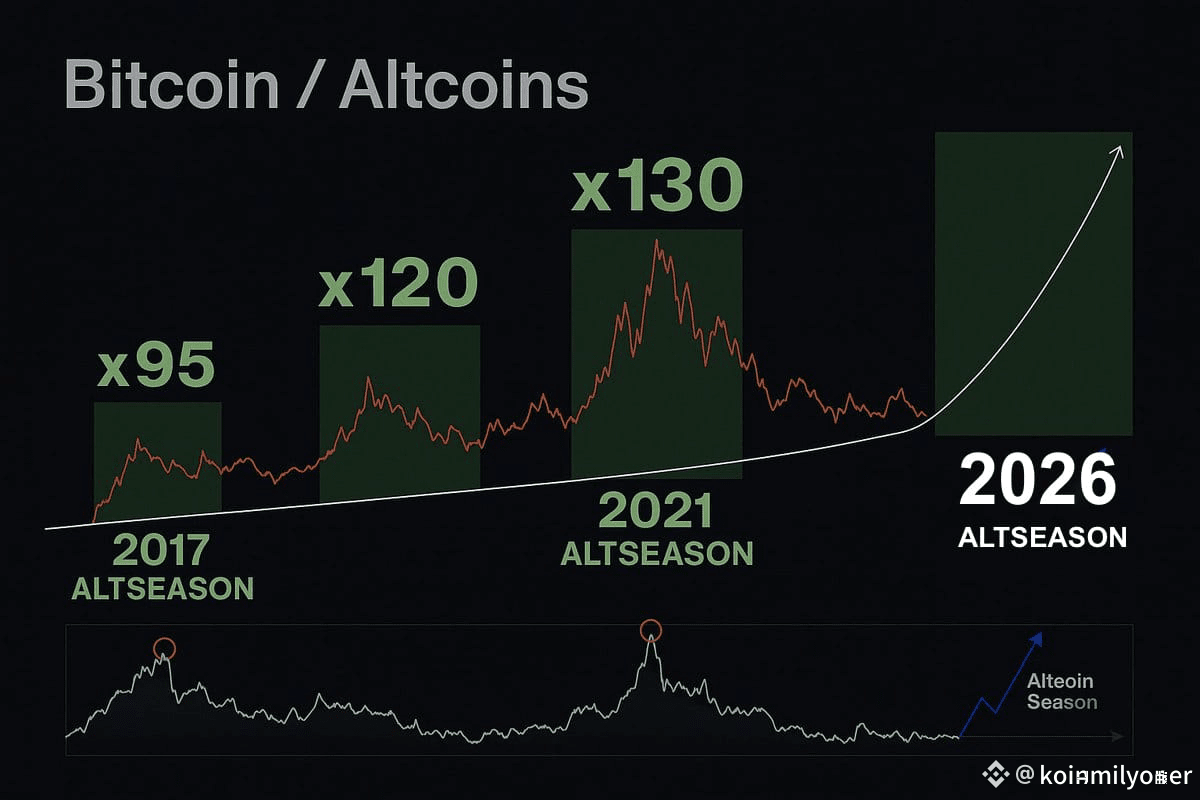
Whenever altcoins begin outperforming Bitcoin and double-digit gains spread across the crypto market, one question quickly takes over: is this the start of a major altcoin season? An altcoin season, often shortened to “altseason,” describes a period when a broad range of cryptocurrencies outside Bitcoin deliver stronger returns than BTC. These periods can create exceptional opportunities, but a few rapidly rising tokens don’t automatically mean a full altseason has arrived.
To identify a genuine shift, you need to look beneath the green charts. Bitcoin dominance, ETH/BTC performance, altcoin market capitalization, trading volume, stablecoin liquidity, and on-chain activity can all reveal whether capital is moving deeper into the crypto market. Investor sentiment and sector rotation matter too. By watching these indicators together rather than relying on hype, you can get a much clearer idea of whether the latest rally has the foundations of a major altcoin season—or is simply another short-lived burst of speculation.
Key Takeaways
- Bitcoin dominance falling during a growing crypto market can signal capital rotation into altcoins.
- ETH/BTC strength may indicate investors are becoming more willing to take risk beyond Bitcoin.
- Market breadth is essential because a true altseason normally involves many cryptocurrencies outperforming.
- Altcoin volume should generally expand as broader market participation increases.
- Stablecoin liquidity can provide additional buying power for a sustained crypto rally.
- On-chain activity helps determine whether rising prices are supported by actual network usage.
- Risk management remains crucial because altcoin seasons can end with extremely sharp corrections.
What Is an Altcoin Season?
An altcoin season is a period when alternative cryptocurrencies collectively outperform Bitcoin. The term doesn’t have one universally accepted definition, so investors use various indexes and market indicators to determine whether an altseason is underway.
The key word is collectively.
If three small-cap tokens suddenly rise 100% while most of the market remains weak, that isn’t particularly strong evidence of altcoin season. A major altseason usually involves widespread strength across large-cap, mid-cap, and eventually smaller cryptocurrencies.
Capital rotation often develops in stages:
Bitcoin → Ethereum → large-cap altcoins → mid-cap altcoins → small caps and speculative tokens
This sequence isn’t guaranteed, but it illustrates how increasing investor confidence can push money progressively further along the crypto risk spectrum.
Why Altcoin Seasons Happen
Bitcoin frequently leads major cryptocurrency rallies because it offers the deepest liquidity and strongest recognition within the digital asset market.
As Bitcoin rises, investors may accumulate significant unrealized or realized profits. If BTC later consolidates while overall sentiment remains bullish, some traders begin looking for greater potential returns elsewhere.
Altcoins become an obvious destination.
Because alternative cryptocurrencies typically have smaller market capitalizations, they require less capital than Bitcoin to produce substantial percentage moves. Rising prices attract attention, which can bring additional buyers and create a self-reinforcing momentum cycle.
This process can spread from established cryptocurrencies into increasingly speculative assets.
Eventually, however, excessive valuations, declining liquidity, profit-taking, macroeconomic changes, or a Bitcoin correction can interrupt the cycle.
Altseason therefore isn’t simply “altcoins going up.” It represents a broader change in where cryptocurrency investors are allocating capital.
Signal #1: Bitcoin Dominance Is Falling
Bitcoin dominance is one of the most popular indicators for identifying potential altcoin seasons.
It measures Bitcoin’s share of the total cryptocurrency market capitalization. When BTC dominance rises, Bitcoin is gaining relative market share. When it falls, altcoins collectively are gaining ground.
But falling dominance needs context.
How to Interpret Bitcoin Dominance
Consider several possible scenarios:
| Market Condition | Possible Signal |
|---|---|
| BTC price rising + dominance rising | Bitcoin-led rally |
| BTC price rising + dominance falling | Altcoins gaining relative strength |
| BTC stable + dominance falling | Potential altcoin rotation |
| Total crypto market rising + dominance falling | Stronger altseason signal |
| BTC crashing + dominance falling | Not necessarily bullish |
The fourth scenario can be especially interesting.
If the overall cryptocurrency market capitalization is increasing while Bitcoin dominance declines, capital may be entering altcoins rather than simply leaving BTC.
Investors should still avoid treating Bitcoin dominance as a perfect timing indicator. Market structure has changed considerably as stablecoins and thousands of new tokens have expanded the overall crypto market.
Dominance is most useful when combined with additional signals.
Signal #2: ETH/BTC Starts Strengthening
Ethereum can serve as an important bridge between Bitcoin and the wider altcoin market.
The ETH/BTC pair measures Ethereum’s value relative to Bitcoin. When ETH/BTC rises, Ethereum is outperforming BTC. When it falls, Bitcoin is the stronger asset.
Sustained ETH/BTC strength can indicate that investors are becoming more comfortable allocating capital outside Bitcoin.
Why Ethereum Matters for Altseason
Ethereum supports a large ecosystem involving decentralized finance, stablecoins, tokenized assets, NFTs, Layer-2 networks, and other blockchain applications.
When ETH begins outperforming, enthusiasm can spread into related ecosystems.
Investors may move from Ethereum into DeFi tokens, Layer-2 projects, infrastructure protocols, and smaller cryptocurrencies.
That makes ETH/BTC a useful gauge of broader crypto risk appetite.
It isn’t mandatory for every future altseason to begin with Ethereum. Other major blockchain ecosystems can lead particular rallies. Still, if ETH/BTC strengthens alongside falling Bitcoin dominance and increasing altcoin volumes, the combined picture becomes considerably more interesting.
One indicator whispers. Several indicators agreeing with each other start making some noise.
Signal #3: Altcoin Market Capitalization Is Expanding
Another important signal is the total value of the altcoin market.
If alternative cryptocurrencies are genuinely entering a broad bull phase, their combined market capitalization should generally increase.
Investors often examine market-cap measurements that exclude Bitcoin or, in some cases, both Bitcoin and Ethereum. Removing the largest assets can provide a clearer view of what is happening among smaller cryptocurrencies.
Look for Higher Highs and Higher Lows
Technical market structure can provide additional context.
If the total altcoin market capitalization begins creating higher highs and higher lows over longer timeframes, it may suggest that capital is consistently entering the market rather than producing one temporary spike.
Key things to monitor include:
- Total altcoin market capitalization
- Market cap excluding BTC and ETH
- Breakouts above previous resistance
- Trading volume during breakouts
- Strength across multiple sectors
A breakout supported by broad participation and increasing volume generally provides stronger evidence than one driven by only a few large cryptocurrencies.
The goal isn’t to predict every price movement. It’s to determine whether market participation is genuinely expanding.
Signal #4: Trading Volume Is Rising Across Altcoins
Price without volume can be misleading.
Trading volume measures how much of an asset changes hands during a particular period. When altcoin prices rise alongside increasing volume, it suggests greater market participation.
During a potential altseason, investors should look for volume expansion across numerous cryptocurrencies—not only whichever meme coin is currently taking over social media.
Market Breadth Matters More Than One Pump
A healthy altcoin rally should ideally show participation across different categories, such as:
- Ethereum and major Layer-1 networks
- Layer-2 projects
- Decentralized finance
- Blockchain infrastructure
- AI-related crypto
- Tokenization and real-world assets
- Gaming
- Smaller emerging ecosystems
When multiple sectors begin breaking higher with increasing trading volume, the rally becomes harder to dismiss as an isolated speculative event.
Conversely, if gains are concentrated among a tiny number of low-liquidity tokens, investors should remain cautious.
A handful of enormous percentage gains can make the market look healthier than it really is.
Signal #5: Stablecoin Liquidity Is Increasing
Crypto rallies require capital, and stablecoins represent an important source of crypto-native liquidity.
Stablecoins such as USDT and USDC are commonly used for trading, transferring capital, participating in DeFi, and holding funds between investments.
Growth in stablecoin liquidity can indicate that additional purchasing power is available within the cryptocurrency ecosystem.
Why Stablecoin Supply Matters
Imagine stablecoins as potential fuel sitting inside the crypto market.
Having more fuel doesn’t guarantee anyone will use it. However, increasing stablecoin balances combined with rising exchange volumes and stronger altcoin prices can support the argument that new liquidity is entering the market.
Investors can monitor stablecoin market capitalization alongside:
- Exchange inflows
- Decentralized exchange volume
- DeFi activity
- Lending demand
- Blockchain bridge activity
Liquidity is particularly important for smaller altcoins because their markets can move substantially when relatively modest amounts of capital arrive.
Of course, that sword has two edges. Liquidity can disappear quickly when sentiment changes.
Signal #6: On-Chain Activity Is Growing
Prices can rise purely because of speculation, but sustainable ecosystem growth usually produces measurable activity.
On-chain data allows investors to examine what users are actually doing on blockchain networks.
Increasing activity can provide evidence that a rally has something more behind it than enthusiastic posts and increasingly creative price predictions.
On-Chain Metrics Worth Watching
Useful indicators can include:
- Active addresses
- Transaction counts
- Decentralized exchange volume
- Protocol fees
- Network revenue
- Total value locked (TVL)
- Stablecoin activity
- Developer activity
Not every metric applies equally to every blockchain.
For example, high transaction counts may mean little if most activity comes from bots or low-value spam. TVL can also rise simply because the underlying assets deposited in a protocol become more valuable.
Context matters.
Ideally, investors want to see several measures of adoption strengthening simultaneously. Rising prices plus increasing users, liquidity, revenue, and transaction activity provide a more convincing fundamental picture.
Signal #7: Capital Is Rotating Into Smaller Altcoins
As a crypto rally matures, traders often move further along the risk curve.
Bitcoin may lead initially. Ethereum and large-cap altcoins can follow. Eventually, mid-cap and smaller cryptocurrencies may begin outperforming.
This rotation can be one of the clearest signs that investor risk appetite is increasing.
Small-Cap Pumps Can Also Be a Warning
Extreme speculation isn’t always bullish.
When obscure tokens begin generating enormous gains without clear catalysts or fundamentals, the market may be entering a highly speculative phase.
Later-stage altseasons can produce extraordinary returns, but they can also precede violent corrections.
Watch for signs of overheating, including:
- Extreme leverage
- Rapidly increasing funding rates
- Low-quality tokens pumping indiscriminately
- Excessive social-media hype
- Vertical price movements
- Weak fundamentals being ignored
- Retail FOMO accelerating
When investors stop asking what a project does and start asking only whether it can “10x,” risk has probably increased considerably.
What Could Stop a Major Altcoin Season?
Even when multiple bullish signals appear, altseason isn’t guaranteed to continue.
A sharp Bitcoin correction can quickly damage confidence across the cryptocurrency market. Altcoins frequently decline more aggressively than BTC because they have lower liquidity and greater speculative exposure.
Macroeconomic conditions can also influence crypto risk appetite. Changes in monetary policy, interest-rate expectations, inflation, economic growth, or broader financial-market stress can reduce demand for speculative assets.
Crypto-specific risks include security breaches, regulatory developments, exchange failures, token unlocks, and excessive leverage.
That’s why monitoring downside risks is just as important as spotting bullish indicators.
Conclusion
Determining whether this is the start of a major altcoin season requires more than watching a few cryptocurrencies produce spectacular daily gains. The strongest evidence comes when several signals align: Bitcoin dominance declines, ETH/BTC strengthens, altcoin market capitalization expands, trading volume rises, stablecoin liquidity improves, and on-chain activity shows genuine growth.
Market breadth is particularly important. A true altseason should eventually involve strength spreading across multiple sectors rather than remaining concentrated in a handful of tokens. At the same time, extreme small-cap speculation can signal that risk is becoming elevated. Instead of trying to perfectly predict the beginning or end of altseason, monitor these indicators together and manage exposure carefully. Crypto markets move fast, and the difference between healthy momentum and full-blown FOMO can become surprisingly small.
FAQs
How long does an altcoin season normally last?
There is no standard duration. Altcoin seasons can develop over weeks or continue for months, depending on Bitcoin performance, liquidity, investor sentiment, and broader market conditions. Individual sectors can also experience shorter mini-altseasons within a larger crypto cycle.
Can altseason happen while Bitcoin is rising?
Yes. Bitcoin can appreciate while altcoins outperform it. A steadily rising or consolidating BTC market can actually provide favorable conditions for altcoins if investors remain confident and begin rotating capital toward higher-risk cryptocurrencies.
Does every altcoin perform well during altseason?
No. Even during broad altcoin rallies, individual cryptocurrencies can underperform because of poor tokenomics, declining adoption, security problems, token unlocks, or weakening narratives. Altseason doesn’t turn every cryptocurrency into a successful investment.
Are meme coins a reliable altseason indicator?
Meme-coin strength can indicate increasing speculative appetite, but it isn’t enough to confirm altseason. A more convincing signal involves widespread gains across major altcoins, infrastructure projects, DeFi, and other sectors alongside improving market breadth.
What is market breadth in cryptocurrency?
Market breadth describes how widely gains or losses are distributed across the market. If hundreds of altcoins across different sectors are strengthening, breadth is relatively broad. If only a few tokens are rising, the apparent rally may be much narrower.
Can an altcoin season end suddenly?
Yes. A Bitcoin correction, liquidity shock, regulatory event, excessive leverage, or sudden change in investor sentiment can reverse altcoin momentum quickly. Smaller cryptocurrencies are particularly vulnerable because their lower liquidity can amplify selling pressure.