
Introduction
Bitcoin usually sets the direction for the cryptocurrency market, but it doesn’t always deliver the biggest percentage gains. During a strong crypto rally, investors often notice Ethereum, Solana, DeFi tokens, and smaller cryptocurrencies suddenly climbing faster than BTC. This shift raises an obvious question in the Bitcoin vs. altcoins debate: why are altcoins outperforming during the latest rally?
The explanation often comes down to capital rotation, market size, liquidity, investor risk appetite, and changing crypto narratives. Bitcoin can attract the first wave of money before traders move profits toward assets with greater potential upside. Because altcoins generally have smaller market capitalizations, new buying pressure can have a much larger effect on their prices. However, bigger gains don’t necessarily mean better investments. Understanding why altcoins outperform—and what could end that trend—can help you judge whether the market is experiencing sustainable expansion or another short-lived speculative surge.
Key Takeaways
- Bitcoin often leads the early stages of a broader cryptocurrency rally.
- Altcoins can outperform BTC because their smaller market capitalizations amplify new buying pressure.
- Capital rotation can shift profits from Bitcoin toward Ethereum and progressively riskier cryptocurrencies.
- Bitcoin dominance is a useful indicator for tracking whether altcoins are gaining relative market share.
- Altseason generally requires widespread altcoin strength rather than a handful of tokens pumping.
- Risk management matters because altcoins typically fall harder than Bitcoin when sentiment reverses.
Bitcoin vs. Altcoins: What’s Driving the Performance Gap?
Bitcoin and altcoins occupy different positions within the cryptocurrency market. Bitcoin is the largest and most established crypto asset, with deep liquidity and widespread recognition. Altcoins include virtually every cryptocurrency other than Bitcoin, ranging from Ethereum and major Layer-1 networks to DeFi tokens and tiny speculative coins.
That difference in size matters.
A huge amount of capital is required to move Bitcoin significantly. Smaller altcoins need considerably less buying pressure to produce large percentage gains.
As bullish sentiment grows, investors may therefore move toward altcoins in search of higher returns.
The trade-off is straightforward: greater potential upside usually comes with greater potential downside.
That’s why altcoin outperformance can indicate growing market confidence—but also increasing speculation.
Bitcoin Often Leads Before Altcoins Take Over
Many cryptocurrency rallies begin with Bitcoin.
When uncertainty is relatively high, investors may prefer BTC because it offers greater liquidity and a longer track record than most alternative cryptocurrencies. Institutional investors can also concentrate heavily on Bitcoin rather than spreading capital across thousands of smaller assets.
As Bitcoin rises, sentiment across the cryptocurrency market can improve.
Eventually, BTC may begin consolidating after a strong move. Traders sitting on profits then have a decision: take money out of crypto entirely or look for opportunities elsewhere.
During bullish conditions, some choose the second option.
Capital can start flowing toward Ethereum and major altcoins. If the rally continues, money may then rotate toward smaller cryptocurrencies.
This creates a familiar progression:
Bitcoin → Ethereum → large-cap altcoins → mid-caps → small-caps → highly speculative tokens
It doesn’t happen perfectly every cycle, but the pattern helps explain why altcoins can suddenly accelerate after Bitcoin has already performed strongly.
Why Altcoins Can Outperform Bitcoin
Market capitalization is one of the simplest explanations for altcoin outperformance.
Bitcoin’s enormous valuation means substantial capital is needed to produce a large percentage move. An altcoin with a much smaller market capitalization can move significantly when even a fraction of that money enters the market.
Liquidity can magnify the difference further.
Smaller Market Caps Create Bigger Price Moves
Imagine two assets.
One has a market capitalization measured in the trillions or hundreds of billions, while another is valued at only a few billion dollars. The same amount of new buying pressure can have dramatically different effects on each market.
Smaller altcoins may also have thinner order books. If demand suddenly overwhelms available sellers, prices can rise extremely quickly.
Several characteristics can amplify an altcoin pump:
- Smaller market capitalization
- Limited circulating supply
- Thin exchange liquidity
- Increasing trading volume
- New exchange listings
- Strong sector narratives
- Social-media attention
- Leveraged trading
These conditions can generate spectacular upside.
Unfortunately, the mechanics aren’t particularly loyal. Thin liquidity can accelerate declines just as effectively when investors start selling.
Bitcoin Dominance Helps Explain Altcoin Strength
One of the most closely watched indicators in the Bitcoin vs. altcoins discussion is Bitcoin dominance.
Bitcoin dominance measures BTC’s percentage share of the total cryptocurrency market capitalization. It can help investors understand whether Bitcoin or the broader altcoin market is gaining relative strength.
If Bitcoin’s price and dominance rise together, BTC is generally leading.
If the total crypto market continues expanding while Bitcoin dominance falls, altcoins may be absorbing a larger portion of available capital.
What Falling Bitcoin Dominance Can Signal
Different combinations can tell different stories:
| Market Situation | Possible Interpretation |
|---|---|
| BTC rising + dominance rising | Bitcoin-led rally |
| BTC rising + dominance falling | Altcoins gaining relative strength |
| BTC consolidating + dominance falling | Potential altcoin rotation |
| Crypto market rising + dominance falling | Broadening altcoin participation |
| BTC falling sharply | Higher risk for most altcoins |
Falling Bitcoin dominance isn’t an automatic buy signal.
For example, Bitcoin could fall faster than certain altcoins, temporarily reducing dominance without creating genuinely bullish conditions.
Investors should therefore combine dominance with market capitalization, volume, ETH/BTC performance, liquidity, and broader price trends.
Ethereum Can Act as a Bridge Between Bitcoin and Altcoins
Ethereum occupies a unique position in crypto markets. It is an altcoin by definition, but its size, liquidity, and extensive ecosystem make it very different from a small speculative cryptocurrency.
That makes Ethereum an important asset to monitor when capital begins moving beyond Bitcoin.
Why the ETH/BTC Pair Matters
The ETH/BTC trading pair measures Ethereum’s performance relative to Bitcoin rather than against the U.S. dollar.
When ETH/BTC rises, Ethereum is outperforming Bitcoin. If that happens alongside falling Bitcoin dominance and increasing altcoin volume, it can strengthen the case that investors are rotating into alternative cryptocurrencies.
Ethereum’s wider ecosystem can also benefit.
Increased attention on ETH can spread toward Layer-2 networks, decentralized exchanges, lending protocols, staking projects, and other blockchain applications.
This doesn’t mean Ethereum must always lead an altseason. Crypto market structures evolve, and other Layer-1 networks can attract significant capital too.
Still, ETH/BTC remains a useful piece of the puzzle when comparing Bitcoin and altcoin performance.
Crypto Narratives Are Boosting Specific Altcoins
Bitcoin has a relatively focused investment narrative. Altcoins cover hundreds of different technologies, applications, and speculative themes.
That diversity gives traders numerous reasons to rotate capital.
During a broad rally, investors might become interested in artificial intelligence, decentralized finance, tokenization, gaming, Layer-1 networks, Layer-2 scaling, or decentralized infrastructure.
Narratives Can Produce Sector-Wide Pumps
When a narrative becomes popular, investors often don’t buy only one token. Capital can spread across multiple projects associated with the same theme.
For example, enthusiasm around AI can increase interest in tokens linked with decentralized computing, AI agents, or data infrastructure.
DeFi rallies may be supported by increasing decentralized exchange volumes, lending activity, protocol revenue, and total value locked.
Tokenization projects may attract attention as traditional financial institutions explore blockchain-based infrastructure.
Investors should still distinguish between narrative momentum and actual adoption.
Useful metrics include:
- Active users
- Transaction activity
- Protocol revenue
- Total value locked
- Developer activity
- Token utility
- Circulating supply
- Upcoming token unlocks
Adding “AI” to a project’s marketing page is easier than building something people actually use. Fundamentals still matter, even when the candles are green.
Is Altcoin Outperformance a Sign of Altseason?
Not necessarily.
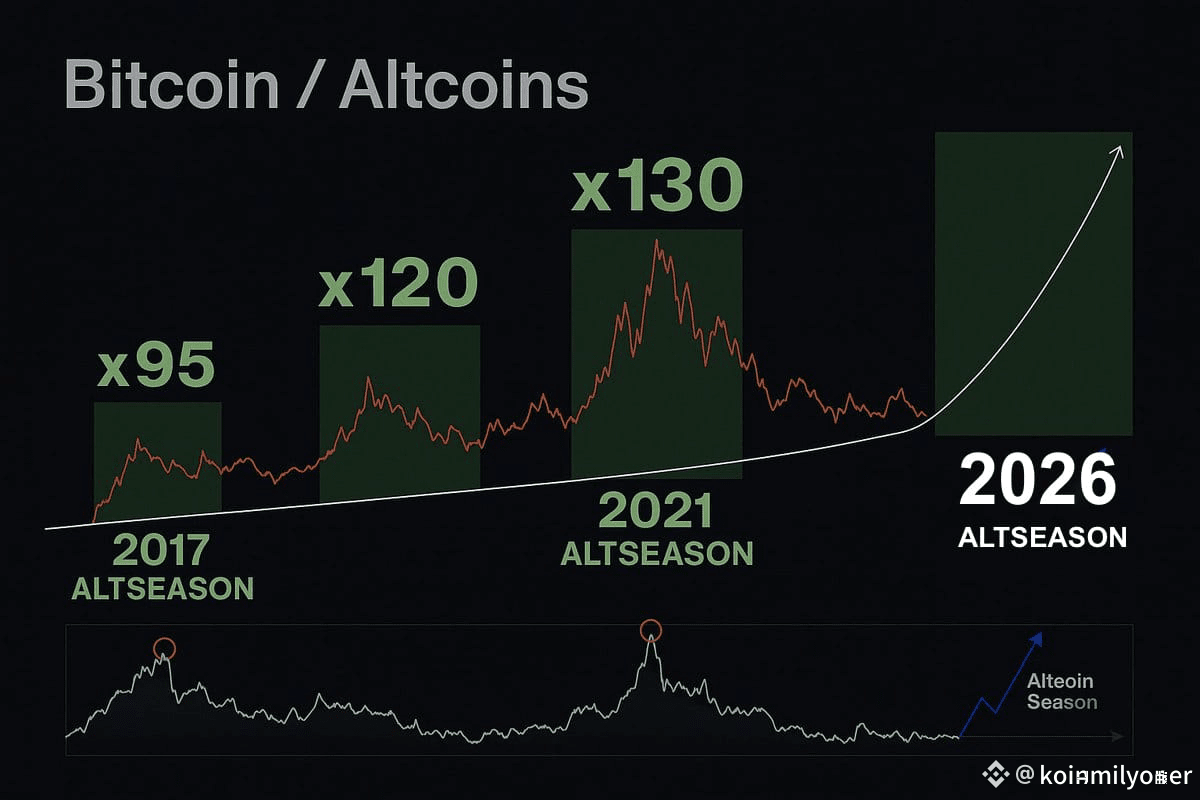
A few altcoins outperforming Bitcoin doesn’t automatically mean the cryptocurrency market has entered a full altcoin season, or altseason.
Altseason generally describes a sustained period when a broad range of alternative cryptocurrencies outperform Bitcoin.
Market breadth is therefore crucial.
Signs Investors Watch for Altcoin Season
Traders may look for several signals occurring together:
- Falling Bitcoin dominance
- Strengthening ETH/BTC
- Rising total altcoin market capitalization
- Expanding altcoin trading volume
- Growing stablecoin liquidity
- Multiple sectors outperforming Bitcoin
- Increased on-chain activity
- Rising retail participation
Capital rotation can also provide clues.
If only meme coins are pumping while major altcoins remain weak, the market may be experiencing a narrow speculative rally rather than broad altseason.
When strength spreads through large caps, Layer-1 networks, DeFi, infrastructure, and eventually smaller projects, the argument for altseason becomes more convincing.
Bitcoin vs. Altcoins: Which Carries More Risk?
Altcoins can outperform Bitcoin substantially during bullish periods, but they generally carry greater risk.
Bitcoin benefits from deeper liquidity and a more established market. Smaller cryptocurrencies may have concentrated token ownership, limited trading liquidity, uncertain demand, inflationary tokenomics, or unproven technology.
Altcoins can therefore decline far more aggressively when sentiment turns bearish.
Why Altcoins Can Crash Faster Than Bitcoin
The same factors responsible for altcoin outperformance can become disadvantages during a correction.
Thin liquidity means large sell orders can quickly push prices downward. Leverage can amplify declines by triggering forced liquidations. Token unlocks can increase available supply precisely when demand starts weakening.
Investors should also consider:
- Smart-contract vulnerabilities
- Exchange liquidity
- Whale concentration
- Token inflation
- Regulatory risks
- Developer activity
- Project revenue and adoption
- Security history
An altcoin outperforming Bitcoin by 50% doesn’t necessarily mean it is fundamentally stronger. Sometimes it simply means traders are willing to accept more risk.
Could Bitcoin Regain Market Leadership?
Yes. Capital rotation works in both directions.
If investors become nervous, they may sell smaller altcoins and move back toward Bitcoin, stablecoins, or traditional currencies. This process can cause Bitcoin dominance to rise even if BTC itself isn’t performing particularly well in dollar terms.
A strong Bitcoin breakout can also pull attention away from altcoins.
Traders may sell alternative cryptocurrencies to gain BTC exposure, temporarily weakening altcoin performance.
That’s why Bitcoin dominance and relative trading pairs remain useful throughout a rally—not just at the beginning.
Market leadership is dynamic. Today’s altcoin-led market can become Bitcoin-led surprisingly quickly.
How Investors Can Evaluate Altcoin Outperformance
Instead of simply asking which asset increased the most, examine whether the performance has confirmation.
Price gains supported by growing volume, network activity, liquidity, users, and revenue can tell a very different story from an isolated pump caused by thin trading conditions.
Consider monitoring:
- Bitcoin dominance
- ETH/BTC performance
- Total altcoin market capitalization
- Stablecoin liquidity
- Trading volume
- Network activity
- Token unlock schedules
- Sector-wide market breadth
No metric can predict the market perfectly.
Combining several indicators can, however, help you understand whether altcoins are outperforming because of genuine capital rotation, fundamental growth, or simply aggressive speculation.
Conclusion
In the Bitcoin vs. altcoins battle, altcoins often outperform during strong crypto rallies because they have smaller market capitalizations, thinner liquidity, and greater sensitivity to changes in investor risk appetite. Bitcoin may attract the first major wave of capital before profits rotate toward Ethereum, large-cap cryptocurrencies, and eventually smaller speculative assets. Falling Bitcoin dominance and stronger ETH/BTC performance can provide additional evidence of that rotation.
But bigger gains come with bigger risks. Altcoin outperformance doesn’t guarantee that a sustainable altseason has begun, nor does it mean every alternative cryptocurrency will continue rising. Investors should watch market breadth, volume, liquidity, token fundamentals, and Bitcoin’s overall trend. Understanding why capital is moving can be considerably more valuable than chasing the latest green candle—and usually a little less stressful too.
FAQs
Can Bitcoin and altcoins outperform at the same time?
Both can rise simultaneously, but outperformance is relative. If Bitcoin gains 10% while an altcoin gains 25% over the same period, the altcoin has outperformed BTC even though both assets have appreciated.
Why do altcoins sometimes fall when Bitcoin pumps?
A rapid Bitcoin rally can pull liquidity away from altcoins as traders move capital into BTC. Altcoin prices may remain flat or decline against Bitcoin until BTC stabilizes and investors become comfortable rotating profits back toward higher-risk cryptocurrencies.
Do institutional investors prefer Bitcoin or altcoins?
Institutional participation varies considerably, but Bitcoin generally benefits from deeper liquidity, greater recognition, and more established financial infrastructure. Some institutions also gain exposure to Ethereum and other digital assets, while smaller altcoins typically involve substantially greater liquidity and regulatory considerations.
What happens to altcoins if Bitcoin dominance rises?
Rising Bitcoin dominance means BTC is increasing its share of the total cryptocurrency market capitalization. Altcoins can still appreciate in dollar terms during this period, but as a group they may be underperforming Bitcoin.
Are altcoins more profitable than Bitcoin during bull markets?
Some altcoins can produce significantly larger percentage returns than Bitcoin, but potential profitability comes with greater risk. Many altcoins also experience deeper drawdowns, fail to recover previous highs, or disappear entirely across market cycles.
Why does Bitcoin stability sometimes help altcoins?
When Bitcoin consolidates after a strong rally, traders may become more comfortable moving profits into higher-risk assets. A relatively stable BTC price can therefore create conditions for capital rotation without the market-wide fear often triggered by a sharp Bitcoin correction.
2 thoughts on “Bitcoin vs. Altcoins: Why Altcoins Are Outperforming During the Latest Rally”