Bitcoin or altcoins—which could deliver stronger performance in September 2026? It’s a deceptively difficult question. Bitcoin remains the crypto market’s primary benchmark and often attracts capital when investors want digital-asset exposure with comparatively lower crypto-specific risk. Altcoins can offer considerably larger percentage moves, but that upside comes with thinner liquidity, greater volatility, token-specific risks, and a habit of turning exciting rallies into painful corrections rather quickly.
The Bitcoin vs. altcoins outlook for September 2026 therefore depends less on picking a guaranteed winner and more on understanding market conditions. Bitcoin dominance, Ethereum’s relative strength, institutional flows, global liquidity, macroeconomic expectations, and market breadth can reveal where capital is moving. This article compares the bullish and bearish cases for both sides, explores the indicators that could signal an altcoin rotation, and explains how investors can evaluate which part of the crypto market has the stronger setup.
Key Takeaways
- Bitcoin: BTC could outperform if investors remain defensive, institutional demand stays concentrated in Bitcoin, or market volatility increases.
- Altcoins: Smaller cryptocurrencies could outperform if liquidity expands and investors become comfortable taking additional risk.
- Bitcoin dominance: Rising dominance generally favors BTC, while a controlled decline can indicate capital rotation toward altcoins.
- Ethereum: ETH/BTC strength may provide an early indication that risk appetite is expanding beyond Bitcoin.
- Market breadth: Broad participation across altcoins is more convincing than rallies concentrated in a handful of tokens.
- Liquidity: Supportive global and crypto liquidity could disproportionately benefit higher-risk altcoins.
- Risk: Potential returns alone shouldn’t determine allocation; liquidity, tokenomics, fundamentals, and downside exposure also matter.
Bitcoin vs. Altcoins in September 2026
The Bitcoin-versus-altcoins debate ultimately comes down to market leadership and risk appetite. Bitcoin typically sits at the more established end of the cryptocurrency risk spectrum, while altcoins range from major smart-contract networks to tiny speculative tokens.
When investors become cautious but still want cryptocurrency exposure, capital may concentrate in BTC. During more speculative periods, money can rotate from Bitcoin into Ethereum and eventually smaller assets.
That rotation isn’t guaranteed to happen in September.
Investors should instead look for evidence that market leadership is changing. Relative performance, trading volumes, stablecoin liquidity, institutional flows, and Bitcoin dominance can help identify that shift.
Another important distinction is that “altcoins” aren’t one investment. Ethereum, large-cap blockchain networks, DeFi tokens, and micro-cap cryptocurrencies have dramatically different fundamentals and risk profiles.
Why September Could Be an Important Month
September has historically attracted attention among crypto traders because Bitcoin has experienced several weak Septembers in previous market cycles. That historical pattern has contributed to a cautious seasonal narrative.
However, seasonality should be treated as context rather than a prediction.
The crypto market of 2026 differs significantly from earlier cycles. Institutional investment products, professional trading firms, increasingly sophisticated derivatives markets, stablecoins, and greater integration with traditional finance can change how capital moves.
September could also coincide with important macroeconomic developments involving inflation, employment, monetary-policy expectations, and global liquidity.
These factors may matter considerably more than the name of the month.
Investors comparing Bitcoin and altcoins should therefore ask a better question than whether September is historically bullish or bearish: Is the market becoming more defensive or more willing to take risk?
The answer can provide clues about whether BTC or altcoins have the stronger relative setup.
Why Bitcoin Could Outperform Altcoins
Bitcoin has several structural advantages when market uncertainty rises. It has the largest cryptocurrency market capitalization, deep trading liquidity, widespread exchange availability, and substantial institutional recognition.
These characteristics don’t make Bitcoin safe in the traditional sense. BTC can still experience dramatic declines. However, it generally carries fewer project-specific variables than smaller cryptocurrencies.
Bitcoin doesn’t depend on a protocol team’s token unlock schedule, the success of one decentralized application, or whether a niche blockchain ecosystem attracts developers.
BTC could therefore outperform altcoins in September if investors become increasingly cautious.
Potential conditions favoring Bitcoin include:
- Macroeconomic uncertainty
- Reduced global liquidity
- Strong institutional BTC demand
- Weak Ethereum relative performance
- Rising Bitcoin dominance
- Regulatory uncertainty affecting specific altcoin categories
- Broad risk-off sentiment
Bitcoin can outperform even while falling. If BTC declines 5% while an altcoin index falls 20%, Bitcoin has still delivered stronger relative performance.
That distinction becomes especially important during corrections.
Institutional Demand Could Favor Bitcoin
Institutional participation may provide Bitcoin with another relative advantage. Regulated investment vehicles and established custody infrastructure can make BTC more accessible to professional investors than many smaller cryptocurrencies.
For September, investors can monitor persistent capital flows rather than reacting to one unusually strong trading session.
Relevant indicators include:
| Indicator | Why It Matters |
|---|---|
| Bitcoin investment-product flows | Provides clues about professional demand |
| Spot trading volume | Shows activity behind price movements |
| Futures open interest | Measures derivatives positioning |
| Funding rates | Helps identify crowded leverage |
| Exchange balances | Can indicate changes in immediately tradable supply |
| Options activity | Provides insight into volatility expectations |
Institutional demand doesn’t guarantee Bitcoin appreciation. Professional investors can sell and hedge just as enthusiastically as retail traders.
Still, sustained demand concentrated in Bitcoin could make it difficult for altcoins to outperform broadly.
If fresh capital enters BTC while Ethereum and smaller assets struggle to attract equivalent flows, Bitcoin dominance could remain elevated or continue rising.
Why Altcoins Could Outperform Bitcoin
Altcoins have one obvious advantage during strong risk-on markets: smaller valuations can allow capital inflows to create much larger percentage price movements.
A billion dollars entering Bitcoin represents a relatively small portion of its market. The same theoretical capital flowing into a smaller cryptocurrency sector can have a considerably larger effect.
This asymmetry helps explain why altcoins can dramatically outperform BTC during speculative phases.
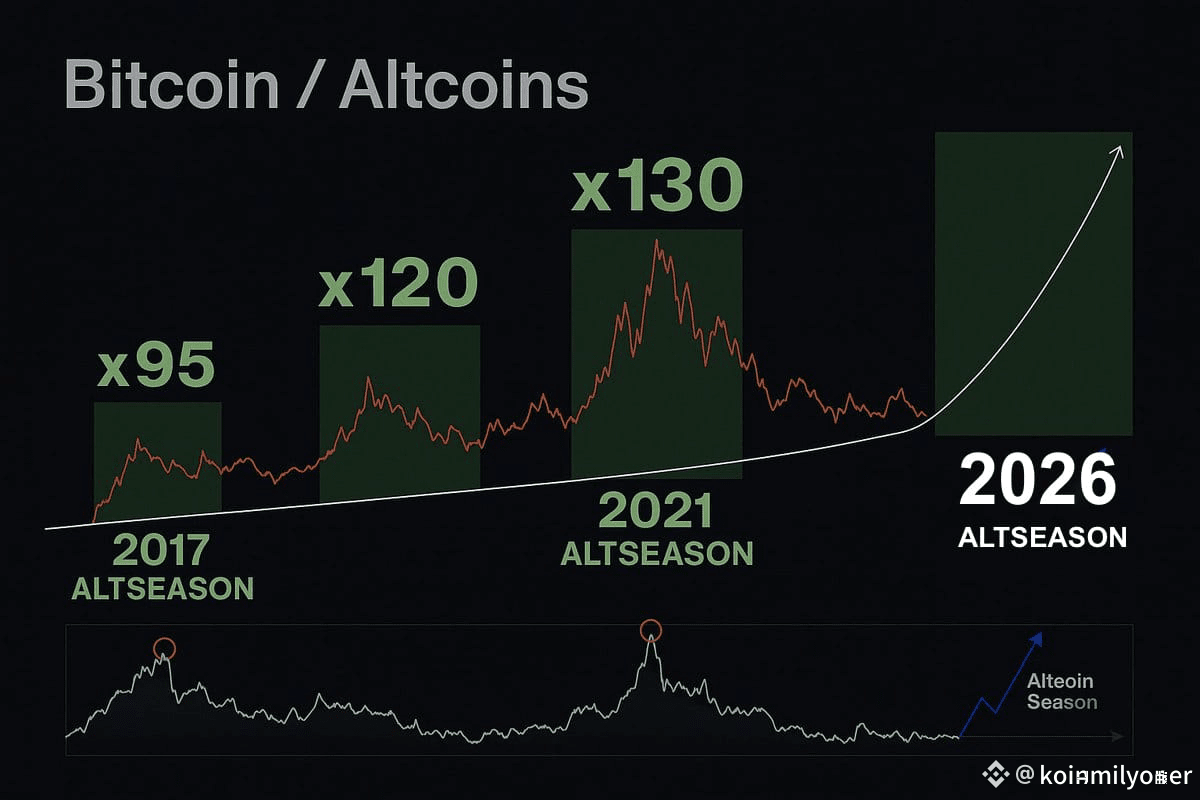
For September 2026, a stronger altcoin environment could develop if Bitcoin remains stable or gradually rises while investors seek higher returns elsewhere.
Supportive conditions may include:
- Expanding crypto liquidity
- Declining Bitcoin dominance
- Strong ETH/BTC performance
- Rising stablecoin activity
- Broadening trading volume
- Increased DeFi activity
- Strength across multiple altcoin sectors
The key word is broadening.
One meme coin tripling doesn’t prove altseason has arrived. Investors should look for sustained participation across different market-cap categories and sectors.
Higher Potential Returns Come With Higher Risk
The same characteristics that allow altcoins to outperform can make their declines more severe.
Many smaller tokens have relatively thin order books. A modest amount of selling can therefore move prices significantly. Some projects also have concentrated ownership, meaning a small number of wallets control substantial portions of supply.
Tokenomics introduce another risk.
Consider two hypothetical assets:
| Factor | Altcoin A | Altcoin B |
|---|---|---|
| Circulating supply | 85% | 20% |
| Annual supply expansion | Low | High |
| Holder concentration | Moderate | High |
| Trading liquidity | Deep | Thin |
| Major unlock approaching | No | Yes |
Even if both projects have exciting technology, Altcoin B could face substantially greater supply-related pressure.
Investors should examine circulating supply, fully diluted valuation, token unlocks, liquidity, protocol revenue, active users, and holder concentration before assuming a low market capitalization automatically means “more upside.”
Sometimes cheap-looking tokens are cheap for fairly sensible reasons.
Bitcoin Dominance Could Reveal the Winner
Bitcoin dominance is among the most popular indicators for comparing BTC with the rest of the cryptocurrency market. It represents Bitcoin’s share of total crypto market capitalization.
Rising BTC dominance generally indicates that Bitcoin is gaining relative market share. Declining dominance suggests other cryptocurrencies are gaining ground.
For September, investors can interpret dominance alongside Bitcoin’s price:
| Bitcoin Price | BTC Dominance | Potential Signal |
|---|---|---|
| Rising | Rising | Bitcoin leadership |
| Stable/rising | Falling | Potential altcoin rotation |
| Falling | Rising | Defensive market; altcoins may be weaker |
| Falling | Falling | Mixed signal requiring more context |
The most constructive scenario for altcoins may be a stable or appreciating Bitcoin accompanied by gradually declining dominance.
Why? Capital can rotate into altcoins without the broader crypto market being destabilized by a BTC crash.
If Bitcoin falls sharply, altcoins frequently experience even greater volatility regardless of what dominance initially indicates.
What Falling Bitcoin Dominance Really Means
Declining dominance shouldn’t be treated as an automatic altcoin buy signal.
Stablecoin market capitalization, the creation of new tokens, and valuation changes across thousands of cryptocurrencies can all influence the calculation. Investors therefore need confirmation.
Look for factors such as rising altcoin volumes, improving market breadth, stronger ETH/BTC performance, and participation across several sectors.
Market breadth describes how many assets are participating in a market move.
If Bitcoin dominance falls because three large altcoins surge while most cryptocurrencies remain weak, the rotation is relatively narrow. If dozens of established assets begin outperforming simultaneously, the trend becomes more convincing.
Investors should also examine duration. A two-day dominance decline could simply reflect temporary speculation.
A persistent trend supported by volume and broader participation provides stronger evidence that market leadership may genuinely be changing.
Ethereum Could Decide the Bitcoin vs. Altcoin Battle
Ethereum deserves special attention because it frequently occupies the middle ground between Bitcoin and smaller altcoins.
ETH has a large, established ecosystem spanning decentralized finance, stablecoins, tokenized assets, layer-2 scaling networks, and other blockchain applications. At the same time, it generally carries greater ecosystem and technological complexity than Bitcoin.
The ETH/BTC ratio measures Ethereum’s performance relative to Bitcoin and can serve as a useful risk-appetite indicator.
Persistent ETH/BTC strength may suggest that investors are moving beyond BTC. That can potentially create more favorable conditions for other large-cap cryptocurrencies and, eventually, smaller altcoins.
Conversely, continued ETH weakness against Bitcoin may indicate that capital remains concentrated in BTC.
Investors should combine price performance with Ethereum fundamentals, including network activity, layer-2 adoption, stablecoin usage, staking participation, DeFi activity, and application demand.
Could Ethereum Lead an Altcoin Rotation?
An Ethereum-led rotation is one possible pathway toward broader altcoin strength.
A hypothetical progression might look like this:
- Bitcoin establishes a strong trend.
- BTC begins consolidating.
- Ethereum starts outperforming Bitcoin.
- Capital moves toward other large-cap cryptocurrencies.
- Mid-cap assets gain momentum.
- Smaller and more speculative tokens attract increased attention.
Real markets rarely follow such a neat sequence, unfortunately.
Sometimes sectors rally independently because of project-specific catalysts. In other cases, speculative capital jumps directly into small tokens while Ethereum remains relatively weak.
Still, sustained ETH outperformance can be a valuable confirmation signal because Ethereum represents a substantial portion of the non-Bitcoin crypto economy.
If ETH/BTC strengthens alongside rising altcoin volume and falling Bitcoin dominance, investors would have several independent signals pointing toward increasing risk appetite.
Altcoin Sectors to Watch in September 2026
If altcoins begin outperforming, returns probably won’t be distributed equally. Crypto capital frequently rotates between narratives and sectors, creating leaders and laggards within the same broader rally.
Potential sectors investors may monitor include:
- Decentralized finance (DeFi): Lending, trading, derivatives, and liquidity protocols.
- Real-world assets (RWA): Blockchain-based tokenization of traditional financial assets.
- Layer-1 networks: Alternative smart-contract ecosystems competing for users and developers.
- Layer-2 networks: Technologies designed to improve blockchain scalability and transaction efficiency.
- Stablecoin infrastructure: Platforms supporting digital payments and on-chain settlement.
- DePIN: Decentralized networks coordinating physical infrastructure.
- AI-related crypto: Projects connecting blockchain technology with artificial intelligence.
Narrative strength alone isn’t sufficient for longer-term investing.
Evaluate active users, fees, revenue, developer activity, token supply, competitive positioning, and actual demand. A sector can have excellent long-term potential while individual tokens within it have terrible economics.
Global Liquidity and Federal Reserve Expectations
The Bitcoin-versus-altcoin question isn’t purely about crypto. Global financial conditions can determine how willing investors are to accept risk.
Interest-rate expectations, inflation, employment, bond yields, currency movements, and central-bank policy can influence capital allocation across both traditional and digital markets.
When liquidity conditions become more supportive, speculative assets can benefit disproportionately. That environment could favor altcoins because they generally represent higher-risk opportunities than Bitcoin.
When conditions tighten, the reverse can occur. Investors may reduce exposure to smaller tokens first, potentially allowing BTC to outperform on a relative basis.
September investors should monitor:
- Inflation data
- Labor-market indicators
- Central-bank communication
- Treasury yields
- U.S. dollar strength
- Global liquidity measures
- Equity-market risk sentiment
Don’t assume lower interest rates automatically mean higher altcoin prices. Markets price expectations ahead of policy decisions, and economic weakness can sometimes overwhelm the benefits of easier policy.
Context remains king—an annoyingly difficult king to predict.
Bitcoin or Altcoins: Three September Scenarios
Rather than declaring one guaranteed winner, investors can consider several scenarios.
Bullish Risk-On Scenario
If liquidity improves, Bitcoin remains stable, Ethereum strengthens, and BTC dominance declines, altcoins could have the better relative setup.
Broader market participation would provide additional confirmation.
Defensive or Risk-Off Scenario
If macroeconomic conditions deteriorate, volatility rises, or crypto liquidity weakens, Bitcoin could outperform smaller cryptocurrencies.
BTC might still decline in absolute terms, but altcoins could experience larger losses.
Bitcoin-Led Bullish Scenario
There’s also a middle possibility: the crypto market rises, but Bitcoin captures most new demand.
Strong institutional flows or BTC-specific catalysts could push Bitcoin higher while altcoins deliver comparatively modest gains.
This scenario demonstrates why “crypto is bullish” doesn’t automatically mean altcoins will outperform Bitcoin.
Investors should determine which environment is developing instead of assuming every market rally eventually becomes altseason.
How Investors Can Compare Bitcoin and Altcoins
Comparing potential returns is only one part of portfolio construction. Investors should also consider volatility, liquidity, investment horizon, project fundamentals, and their ability to tolerate losses.
Bitcoin may appeal more to investors seeking comparatively established crypto exposure. Altcoins may suit those willing to accept significantly greater project-specific and market risk in pursuit of higher potential returns.
Before increasing altcoin exposure, consider asking:
- Is Bitcoin structurally stable?
- Is BTC dominance trending lower?
- Is Ethereum outperforming BTC?
- Is market breadth improving?
- Are altcoin volumes increasing?
- Is liquidity supportive?
- Does the individual project’s tokenomics make sense?
There doesn’t need to be an all-or-nothing choice.
Some investors may use Bitcoin as a core crypto allocation while maintaining smaller positions in carefully selected altcoins. The appropriate balance depends on objectives, time horizon, and risk tolerance rather than September predictions alone.
Conclusion
So, Bitcoin vs. altcoins: which could perform better in September 2026? Bitcoin may have the advantage if market conditions become defensive, institutional demand remains concentrated in BTC, or global liquidity deteriorates. Altcoins could outperform if Bitcoin stays structurally strong while ETH/BTC rises, Bitcoin dominance declines, liquidity expands, and market participation broadens.
The better approach is to monitor these conditions rather than commit to one prediction at the start of the month. Watch BTC dominance, Ethereum’s relative performance, institutional flows, market breadth, leverage, and macroeconomic signals. If capital clearly rotates outward, selective altcoins could offer greater upside. If uncertainty increases, Bitcoin may prove relatively resilient. Either way, position sizing and risk management matter more than successfully guessing September’s biggest winner.
FAQs
Can Bitcoin dominance rise while some altcoins still outperform Bitcoin?
Yes. Bitcoin dominance measures BTC against the entire crypto market, so individual altcoins can significantly outperform even while overall dominance rises. Investors should combine dominance with sector performance and individual asset analysis rather than using it as a universal trading signal.
Are large-cap altcoins safer than small-cap altcoins?
Large-cap altcoins generally have deeper liquidity and more established markets, but they’re not automatically safe. Technology failures, regulation, competition, token inflation, or declining usage can affect any project. Smaller tokens typically add greater liquidity, volatility, and concentration risks.
What does an altcoin’s fully diluted valuation mean?
Fully diluted valuation estimates a cryptocurrency’s market value assuming its maximum or eventual token supply were circulating at the current price. Comparing it with current market capitalization can help investors identify projects where substantial future token issuance may create dilution risks.
Why do altcoins often fall harder than Bitcoin?
Many altcoins have thinner liquidity, smaller investor bases, higher speculative positioning, and greater project-specific uncertainty. During risk-off periods, investors may sell these assets first. Reduced market depth can then amplify price movements, producing larger percentage declines than Bitcoin.
Can a diversified altcoin portfolio reduce crypto risk?
Diversification can reduce exposure to the failure of one individual project, but many altcoins remain highly correlated during market downturns. Owning numerous tokens doesn’t necessarily protect a portfolio when broad crypto liquidity disappears, so position sizing remains important.
Should traders use the ETH/BTC ratio instead of Bitcoin dominance?
The two indicators measure different things and can complement each other. ETH/BTC directly compares Ethereum with Bitcoin, while BTC dominance compares Bitcoin with the broader cryptocurrency market. Using both alongside volume, liquidity, and market breadth provides more context.